Practice Reading with Short CVC Stories English Reading Material
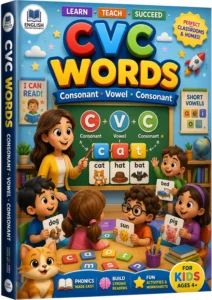
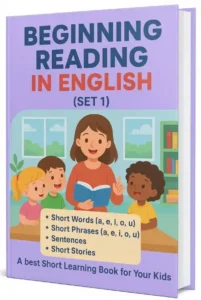
Practice Reading with Short CVC Stories English Reading Material is exactly what young learners need to build confidence and fluency. CVC words—consonant-vowel-consonant words like “cat,” “dog,” and “sun”—are the simplest words for early readers to decode. When you practice reading with short CVC stories English reading material, children stop guessing and start sounding out every letter. This systematic approach turns struggling beginners into proud, independent readers.
Why CVC Stories Are the Best First Step
Many reading programs start with predictable picture books, but those encourage memorization, not decoding. In contrast, when you practice reading with short CVC stories English reading material, your child learns to blend sounds like /c/ /a/ /t/ into “cat.” This skill transfers to every new word they meet. High‑quality practice reading with short CVC stories English reading material focuses on one short vowel sound at a time—first short /a/ (cat, bat, map), then short /e/ (hen, red, pet), and so on. Because the stories are only 20–30 words long, children finish quickly and feel a real sense of achievement.
What to Look for in Good CVC Reading Material
Not all worksheets are equal. Effective practice reading with short CVC stories English reading material includes:
- Large, clear print – easy for little fingers to track.
- Matching illustrations – the picture should directly match the text so children can check their decoding.
- Repetitive sentence patterns – “The cat sat. The cat ate.” This repetition builds automaticity.
- Comprehension questions – simple “what” and “who” questions after each story.
You can find free practice reading with short CVC stories English reading material online, or create your own using index cards and stickers.
Sample CVC Story: “The Hot Pot”
Here is an example of excellent practice reading with short CVC stories English reading material:
Tom has a pot. The pot is hot. Tom puts a lid on the pot. The pot has pop. Pop! Lid off!
After reading, ask: “What does Tom have?” (A pot.) “Is the pot cold or hot?” (Hot.) “What goes pop?” (The lid or the corn.)
How to Practice Effectively
- Before reading – review the target vowel sound. For the story above, practice /o/ as in “pot,” “hot,” “pop.”
- During reading – have your child point to each word and say each sound, then blend.
- After reading – read the story a second time, but faster. The third time, with expression.
Just 10 minutes of daily practice reading with short CVC stories English reading material can double a kindergarten or first‑grader’s reading speed in one month.
Final Tips for Parents and Teachers
Keep sessions positive. Praise every attempt. If your child misreads “pot” as “pat,” simply say, “That says /p/ /o/ /t/ – pot. Let’s try again.” Remember, the goal is progress, not perfection. Start with short /a/ stories, then move through the vowels. With consistent practice reading with short CVC stories English reading material, you will soon hear your child say, “I can read this all by myself!” – and that moment is priceless. Download a free set today and begin your child’s reading adventure.