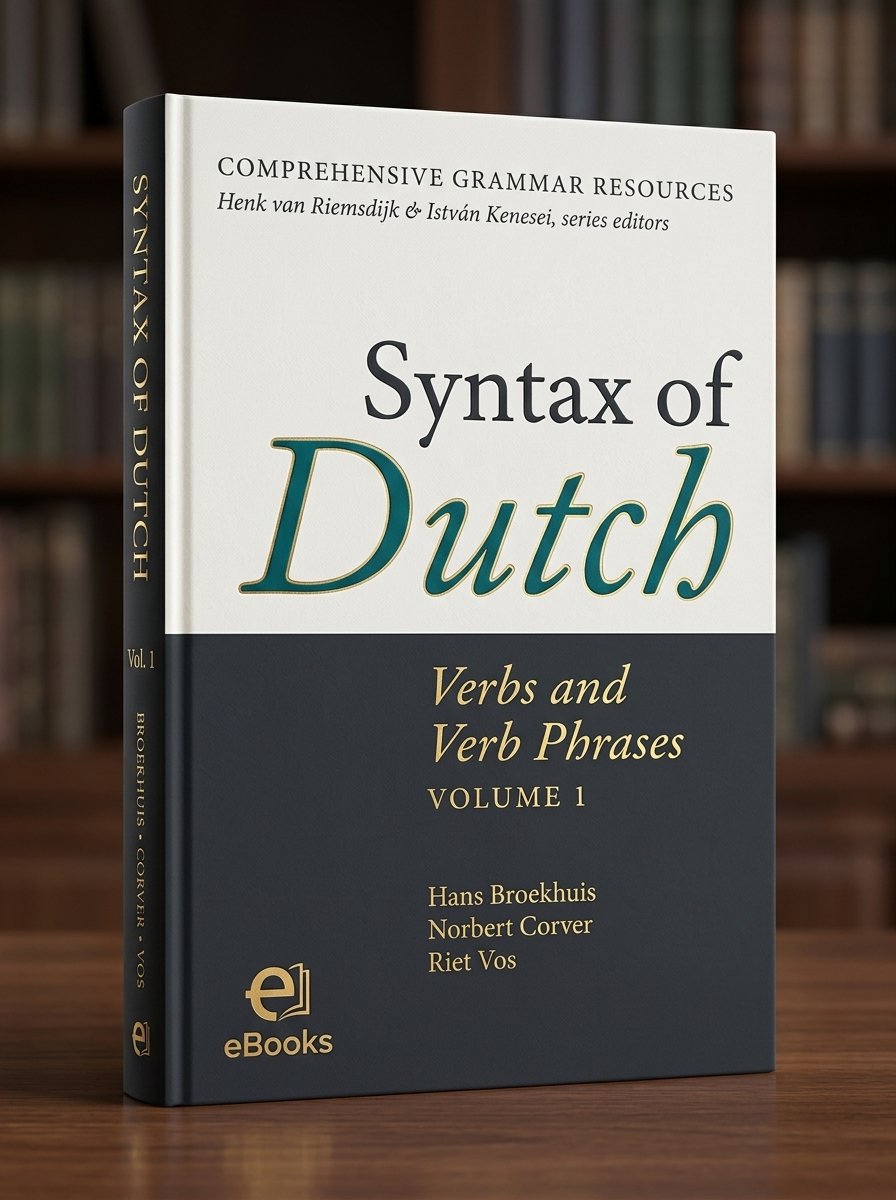
Learning Dutch can be both fascinating and challenging, especially when it comes to understanding its sentence structure and verb usage. For students, linguists, and language enthusiasts, mastering the mechanics of verbs is a major step toward fluency. That’s where Syntax of Dutch – Verbs and Verb Phrases – Volume 1 becomes an essential resource.
This detailed grammar guide explores how verbs and verb phrases function in Dutch sentences, helping readers build a solid understanding of the language’s syntax. Whether you’re a beginner aiming to strengthen your grammar or an advanced learner interested in linguistic analysis, this book provides the depth and clarity you need. Best of all, it’s available as a free PDF download, making it accessible to everyone eager to enhance their Dutch language skills.
Understanding Dutch Syntax: Why It Matters
Syntax refers to the way words and phrases are arranged to form sentences. In any language, syntax determines meaning and clarity. Dutch, like English and German, follows specific rules that govern word order, verb placement, and phrase structure.
For example, the position of verbs in Dutch sentences often changes depending on whether the sentence is a statement, question, or subordinate clause. Consider these examples:
- Ik lees het boek. (I read the book.)
- Lees ik het boek? (Do I read the book?)
- Ik weet dat ik het boek lees. (I know that I read the book.)
While these sentences all use the same words, the verb “lees” (read) moves to different positions according to the sentence type. This is just one of the many fascinating aspects covered in Syntax of Dutch – Verbs and Verb Phrases – Volume 1.
By understanding syntax, learners not only improve their grammar but also gain the ability to construct natural, fluent sentences — a vital skill for effective communication.
What “Syntax of Dutch – Verbs and Verb Phrases – Volume 1” Offers
This comprehensive volume focuses on how verbs and verb phrases operate within Dutch sentence structures. It breaks down complex grammatical topics into clear, manageable sections.
Here’s what you’ll find inside:
1. Detailed Explanations of Verb Categories
The book introduces different types of verbs — such as regular, irregular, modal, auxiliary, and reflexive verbs — explaining how each functions in context. It also highlights differences between Dutch and English verb systems, helping learners avoid common mistakes.
2. Insights into Verb Placement and Order
One of the most challenging aspects of Dutch syntax is verb placement. The guide explores main clause versus subordinate clause structures, word order shifts, and how multiple verbs interact in complex sentences.
3. Comprehensive Treatment of Verb Phrases
Syntax of Dutch – Verbs and Verb Phrases – Volume 1 dives deep into verb phrase formation — including infinitive constructions, separable verbs, and participle usage. These explanations make even the trickiest grammar patterns easy to understand.
4. Linguistic Perspective and Examples
Unlike basic textbooks, this volume also appeals to linguists and advanced learners. It provides structural analyses, syntactic trees, and numerous examples illustrating how verbs function in different sentence environments.
5. Practical Learning for Students
Despite its academic depth, the book remains accessible to non-specialists. Every concept is supported with real-life examples and exercises that allow readers to apply what they’ve learned immediately.
Why This Book Is Ideal for Dutch Learners
What makes Syntax of Dutch – Verbs and Verb Phrases – Volume 1 stand out is its ability to blend theory with practicality. It’s not just about memorizing rules — it’s about understanding the logic behind them.
Here are a few reasons why this resource is perfect for Dutch learners:
- Clear and Logical Structure: Each chapter builds progressively from simple concepts to advanced syntax.
- Rich Examples: Real Dutch sentences demonstrate how rules work in everyday use.
- Cross-Language Comparisons: English translations help readers see how Dutch grammar differs from other languages.
- Free and Accessible: Available as a free PDF, it’s easy to download and study anytime, anywhere.
Whether you’re preparing for an exam, working on translations, or simply aiming to speak Dutch correctly, this book provides the grammatical foundation you need.