Book Link is Given Below:
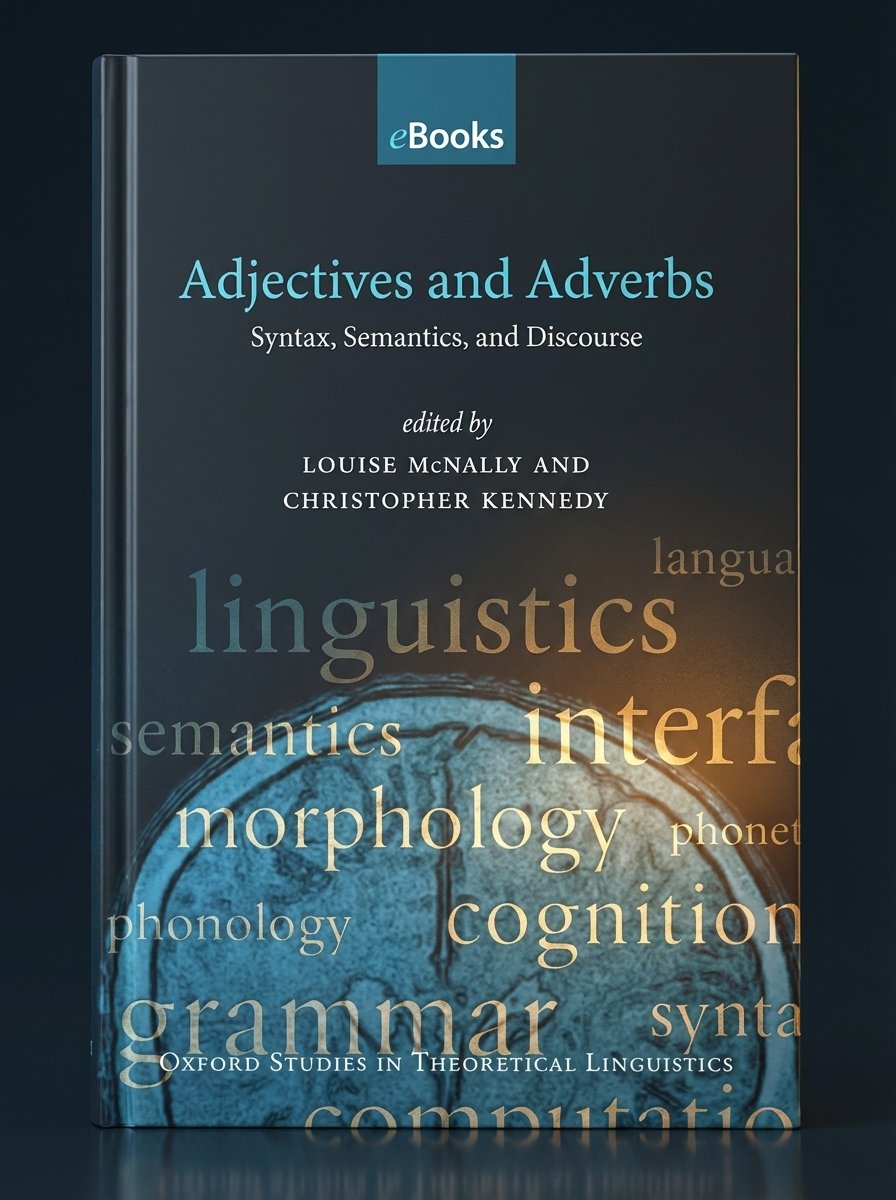
When learning English, understanding how words work together is essential for clear communication. Among the most powerful tools in the English language are adjectives and adverbs — words that bring sentences to life by adding color, detail, and meaning. But to use them effectively, learners need to understand not just their definitions, but also their syntax (how they fit in sentences) and semantics (what they mean). That’s exactly what Adjectives and Adverbs Syntax, Semantics aims to teach — the structure and sense behind these descriptive words.
This concept is especially valuable for English learners who want to move beyond basic grammar and start writing and speaking with precision and style.
What Are Adjectives and Adverbs?
Before diving deeper, let’s define the two:
- Adjectives describe or modify nouns and pronouns.
- Example: The tall building, a beautiful view, an interesting story.
- Adverbs modify verbs, adjectives, or other adverbs.
- Example: She runs quickly., He speaks very softly., They worked extremely hard.
Both play an important role in creating vivid and meaningful sentences. Without them, language would sound flat and dull.
For example:
“The dog barked.” → simple and factual.
“The small brown dog barked loudly.” → more descriptive and expressive.
This transformation happens because of adjectives and adverbs — and understanding their syntax and semantics helps learners use them effectively.
The Syntax of Adjectives and Adverbs
Syntax refers to the rules that govern word order and structure in a sentence. In English, adjectives and adverbs have specific positions depending on what they describe.
1. Adjective Placement (Syntax Rules)
- Before a noun (the most common position):
- A delicious meal, a difficult question
- After a linking verb (such as be, seem, become):
- The weather is nice., She seems happy.
When using multiple adjectives, there’s even an order to follow — opinion, size, age, shape, color, origin, material, and purpose.
Example: A lovely small old wooden chair.
These patterns are essential to learn, and Adjectives and Adverbs Syntax, Semantics provides examples that make understanding these rules simple and intuitive.
2. Adverb Placement (Syntax Rules)
Adverbs can move around in a sentence depending on emphasis:
- At the beginning: Quickly, she packed her bag.
- In the middle: She quickly packed her bag.
- At the end: She packed her bag quickly.
Each position slightly changes the rhythm or focus of the sentence. Learning how to choose the right placement helps learners sound more natural and fluent.
The Semantics of Adjectives and Adverbs
Semantics deals with meaning — what words actually convey. While syntax shows how to structure sentences, semantics explains what adjectives and adverbs contribute to understanding.
1. Adjectives Add Qualities and Emotions
Adjectives provide essential details that shape how readers or listeners imagine something. For instance:
- A cold day vs. a freezing day — both describe temperature, but one feels more intense.
- A good book vs. a fascinating book — the second suggests a stronger emotional response.
By exploring Adjectives and Adverbs Syntax, Semantics, learners can recognize subtle differences in meaning and choose the best word to express exactly what they want.
2. Adverbs Add Clarity and Precision
Adverbs help describe how, when, where, or to what extent something happens.
- She answered correctly. (How?)
- He arrived early. (When?)
- They live nearby. (Where?)
- I completely agree. (To what extent?)
Each adverb adds a layer of meaning that makes communication more specific and engaging.
Common Mistakes and How to Avoid Them
Even advanced learners sometimes confuse adjectives and adverbs. For example:
 She runs beautiful. →
  She runs beautifully.
- He feels badly. → He feels bad.
The confusion happens because of overlapping forms and exceptions. Books and materials focusing on Adjectives and Adverbs Syntax, Semantics often include practice exercises that highlight these tricky areas, helping learners build accuracy through repetition and examples.